
Singapore Population Growth & Housing Demand (2026)
Will More Citizens Push Property Prices Higher?
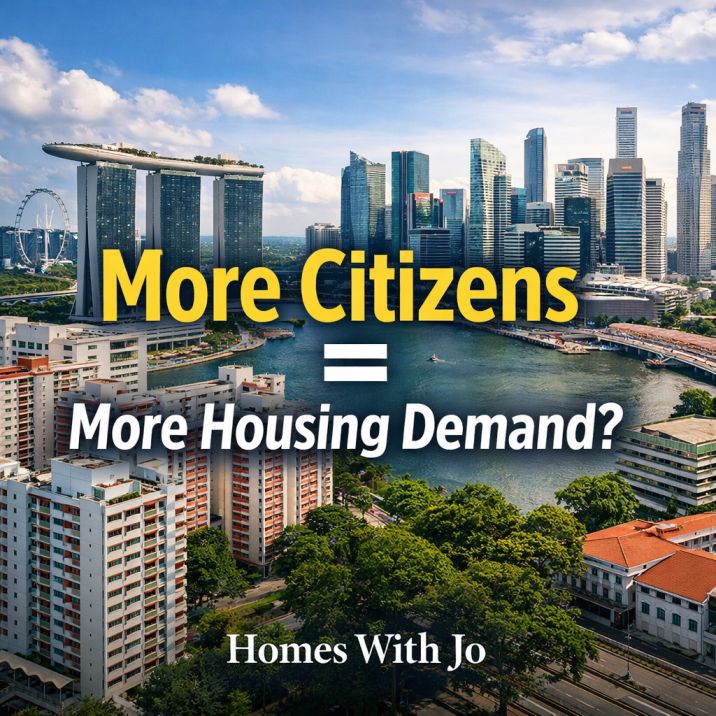
As reported by The Straits Times, Singapore is expected to grant approximately 25,000 to 30,000 new citizenships annually, alongside a steady intake of permanent residents. This is part of a long-term strategy to maintain population stability and economic sustainability.
Singapore’s Population Challenge
Singapore faces a structural demographic shift — falling birth rates and a rapidly ageing population.
- Shrinking workforce over time
- Higher dependency ratio
- Long-term economic pressure
To address this, immigration is used as a controlled mechanism to stabilise the population base.
Why Immigration Is Necessary
New citizens are not just numbers — they form the next layer of Singapore’s housing demand.
- Enter workforce
- Form households
- Participate in housing system
Over time, this sustains long-term demand across both HDB and private property markets.
How Population Growth Drives Housing Demand
Housing demand in Singapore follows a clear progression:
- Entry: Rental or family housing
- Ownership: HDB flats
- Upgrade: Private condos
This creates continuous demand — not speculative, but structural.
This is why Singapore property remains resilient across cycles.
Why Housing Supply Must Keep Increasing
To support demand, supply must keep pace.
- Increased BTO launches
- More MOP flats entering resale
- Ongoing GLS programme
If you're unfamiliar with how land supply works, read: Understanding the GLS Programme
Singapore does not oversupply — it calibrates supply carefully.
Why Property Prices Remain Supported
Even with more supply, prices remain supported due to:
- Limited land
- High construction cost
- Strong underlying demand
- Controlled release of new land
This explains why prices rarely see sustained declines.
What This Means for Buyers
HDB Buyers
- More options but continued competition
Upgraders
- Private demand remains supported
- Timing matters more than waiting
Investors
- Long-term demand remains intact
- Focus on entry and location
Before making a move, understand:
How This Connects to New Launch Condos
Population growth supports long-term demand for new launches.
In transformation areas like Bayshore, this becomes even more significant.
- New MRT connectivity
- Coastal lifestyle positioning
- Future housing supply cluster
Frequently Asked Questions
Will more new citizens cause property prices to drop?
No. It supports long-term demand.
Does this increase competition?
Yes, especially in HDB and entry-level private segments.
Should buyers wait?
Waiting gives more options, not necessarily better pricing.
Why is Singapore property resilient?
Because it is supported by policy and controlled supply.
- Population growth supports demand
- Supply is carefully managed
- Prices are structurally supported
- Planning matters more than timing
Planning Your Next Move?
I can help you plan your upgrade, investment or new launch entry based on your timeline and financial position.
Contact Jo Now